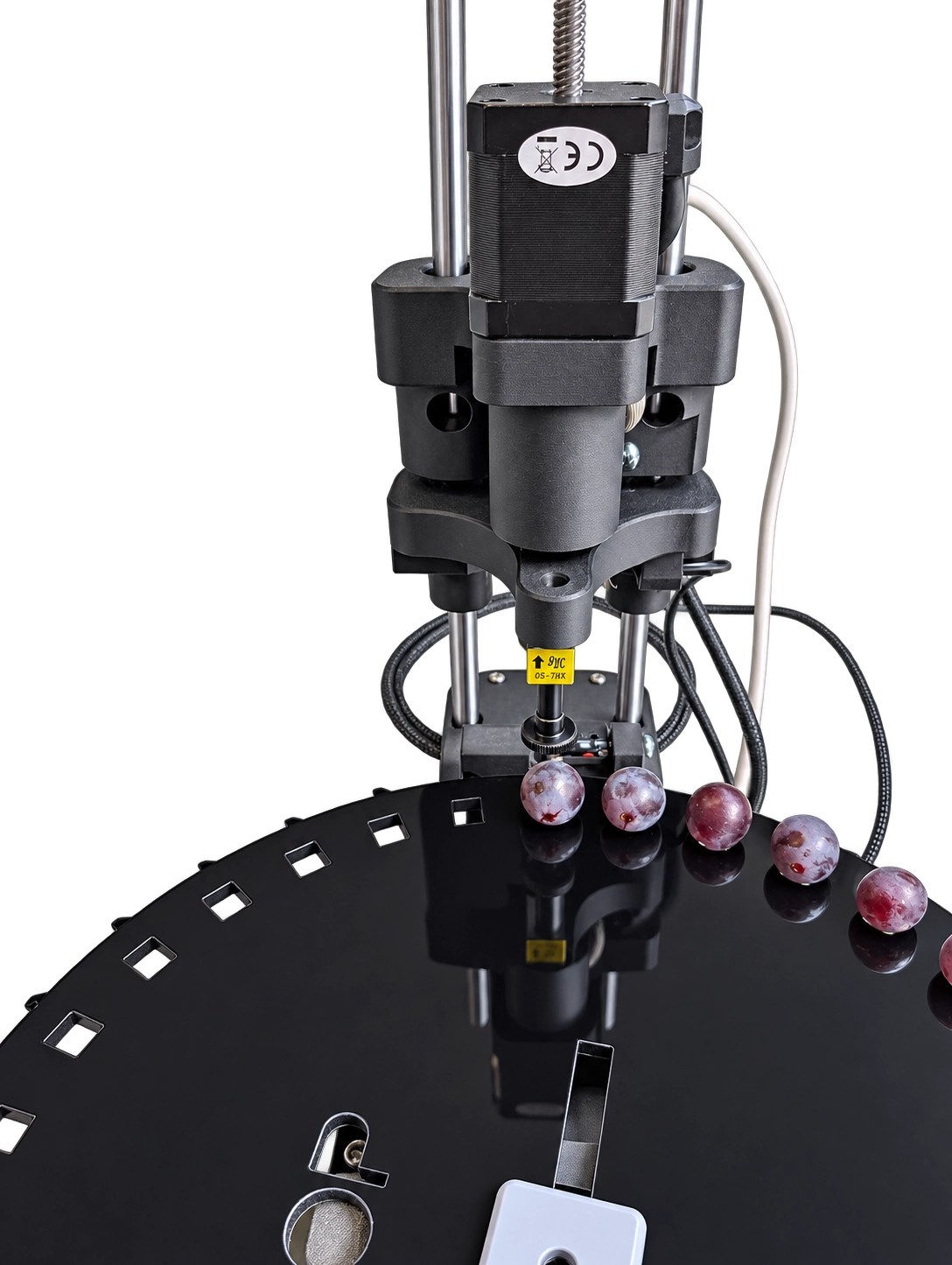
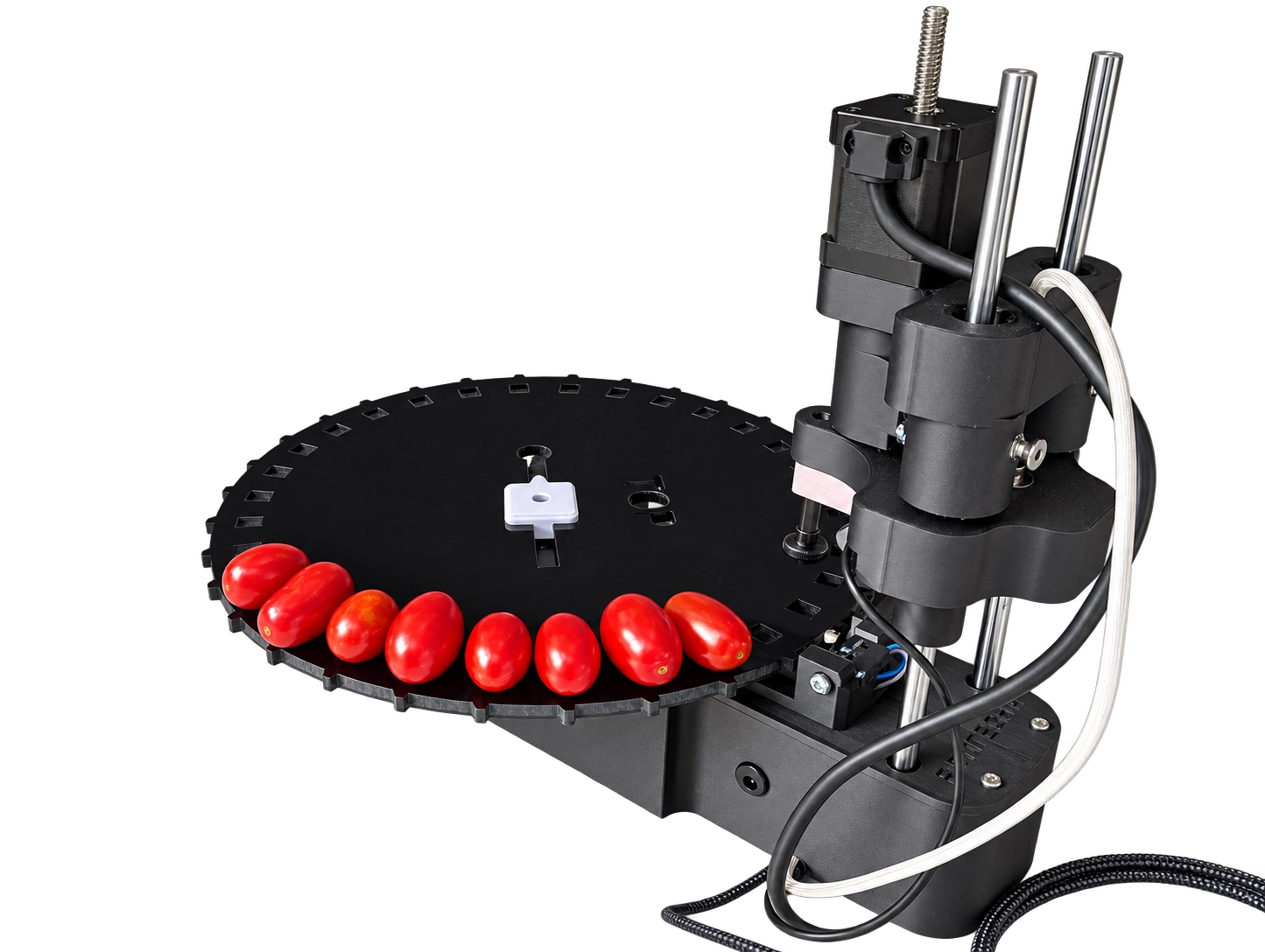
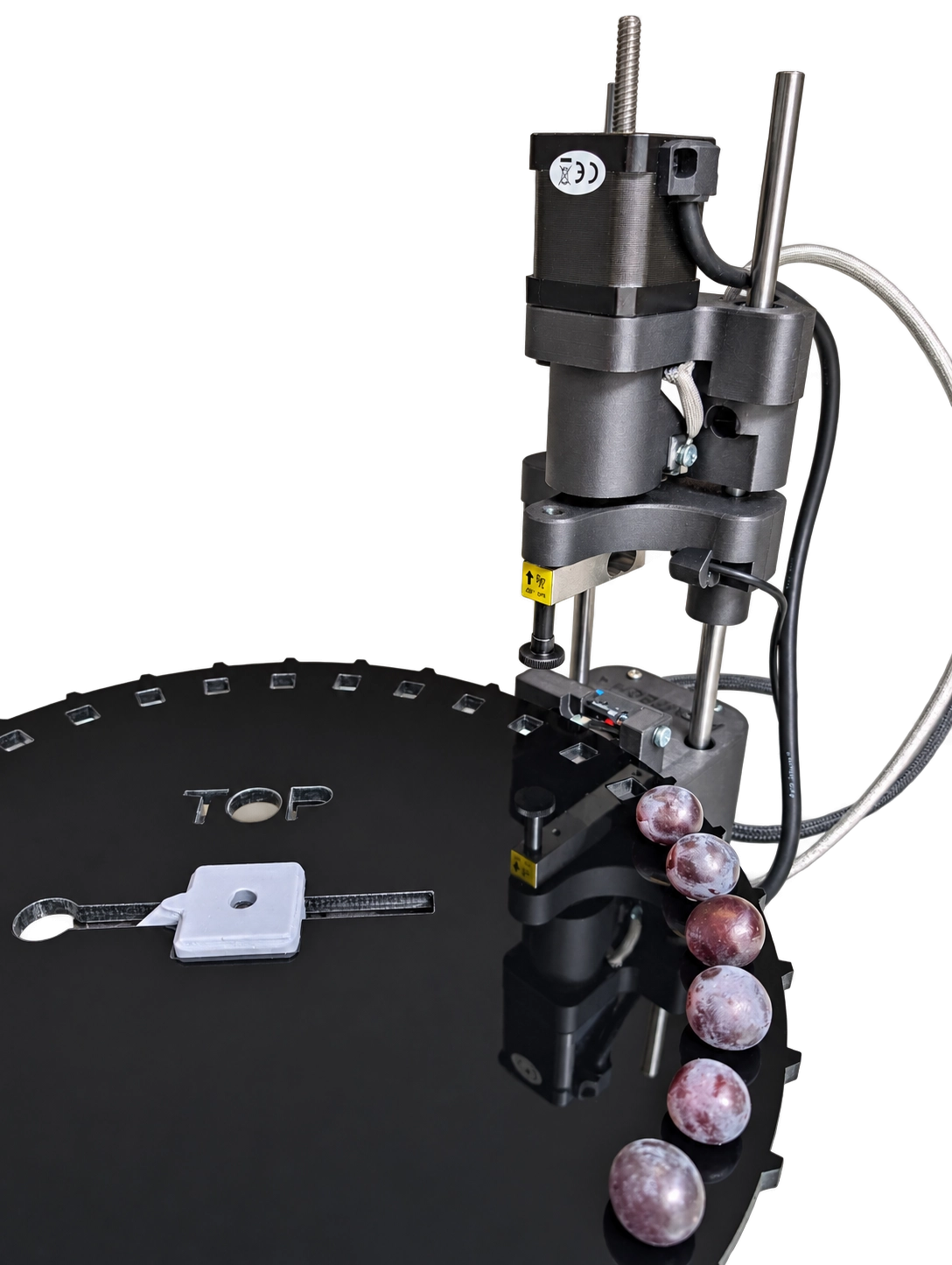
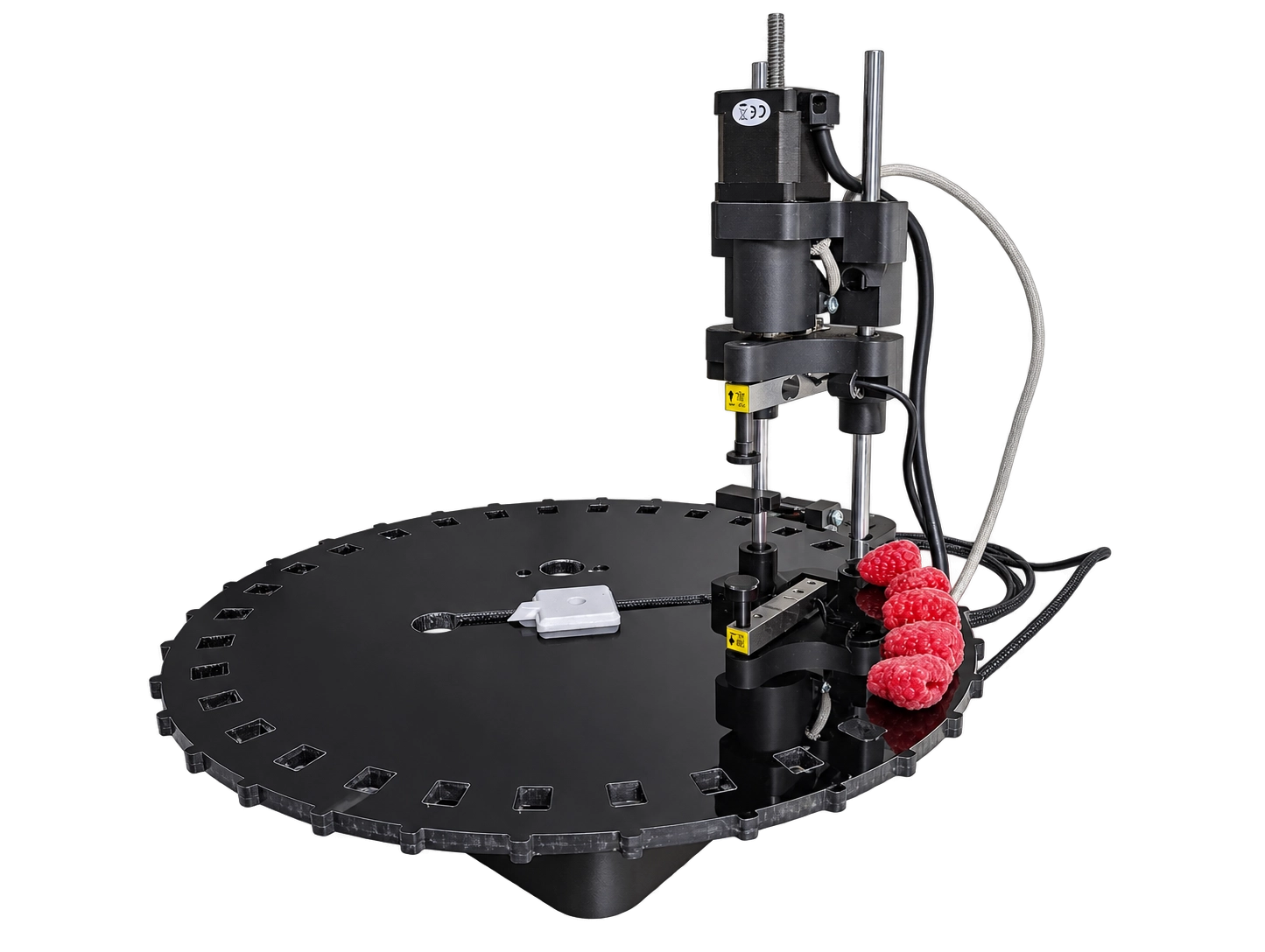
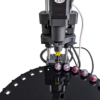
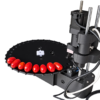
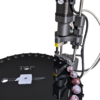
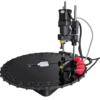
FIRMTECH A: Automated Firmness Testing for Soft Fruit and Berries & Fine Texture Analyser for a Wide Range of Products (food, cosmetics and pharmaceuticals)
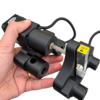
FIRMTECH A is a benchtop texturometer with a motorised turntable and companion software, designed for the objective, repeatable measurement of:
– Firmness in delicate fruit: blueberries, blackberries, raspberries, cherries, grapes, cherry tomatoes, olives, plums, strawberries, peaches and other soft produce.
– Fine texture profile analysis (TPA) of a wide range of products: foods such as tea, cosmetic creams, pharmaceutical products and other soft or delicate materials that deform under just a few grams of force.
It replaces manual squeeze tests and slow one-sample-at-a-time instruments with an automated, sample-indexed workflow, so a whole tray or batch can be measured in a single run and recorded straight to a spreadsheet.
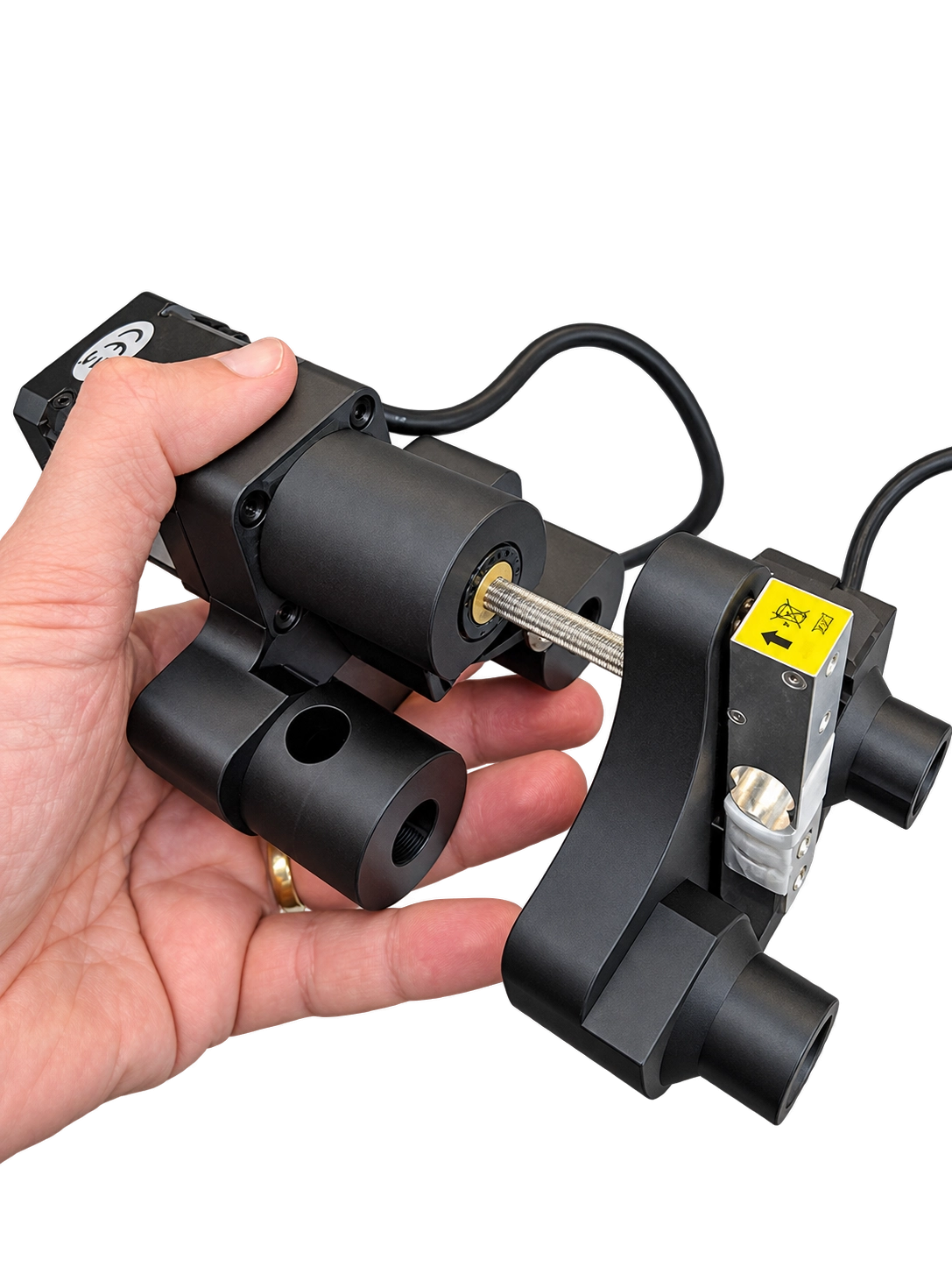
Precision: ±0.01 mm positioning and 0.2 g force resolution. Load capacity: up to 3 kg.
Built for researchers, formulators and quality controllers
Whether you are comparing cultivars, tracking firmness loss through postharvest storage, characterising the texture of a new formulation, or running routine incoming-lot checks, FIRMTECH A gives you consistent, documented measurements with minimal operator handling:
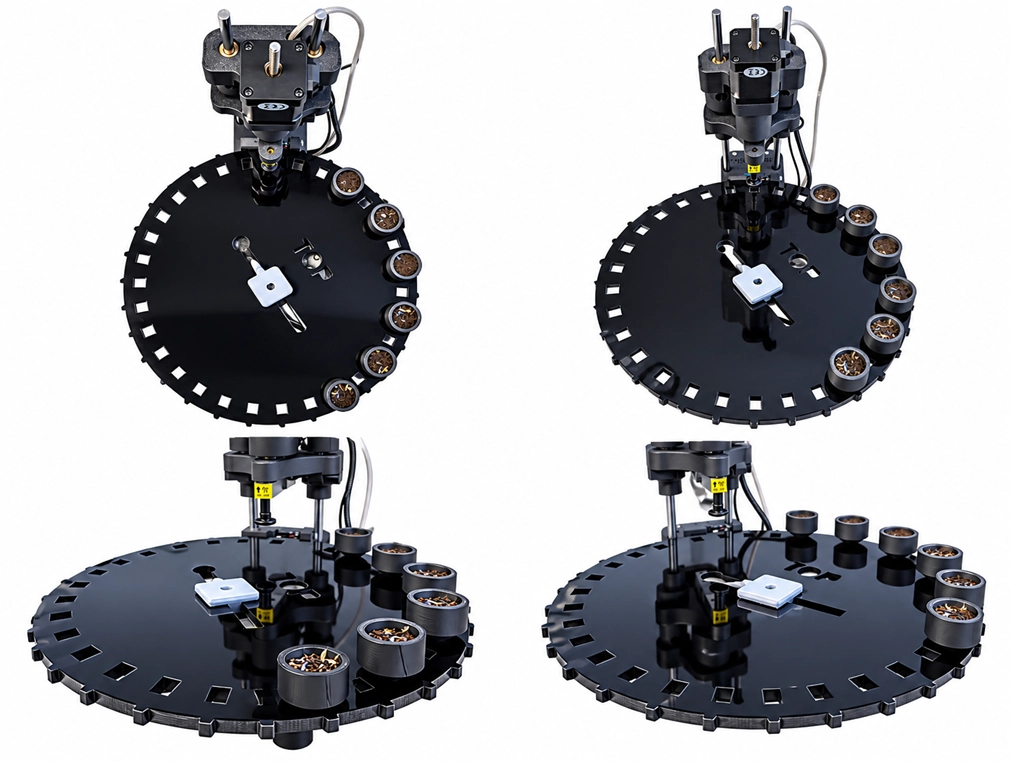
Fully automated sample sequence. A motorised turntable indexes each sample under the probe. For every sample the instrument advances to the next position, re-zeroes the carriage and the load cell, descends, measures, and returns, with no operator intervention between samples (1 to 99 samples per run). The sequence can also be set to measure only every other notch.
Fine position adjustment. The probe landing position relative to each turntable notch can be trimmed in 0.01° steps (±10°), so small samples can be centred precisely under the probe.
Automatic tare and homing. The instrument homes the carriage and tares the force sensor at start-up and before every measurement, removing drift and positioning error from your results.
Overload protection. If the force exceeds a safety limit, the carriage immediately retracts and the operator is alerted, protecting both the sample tray and the sensor.
Fruit firmness: two complementary measurement modes
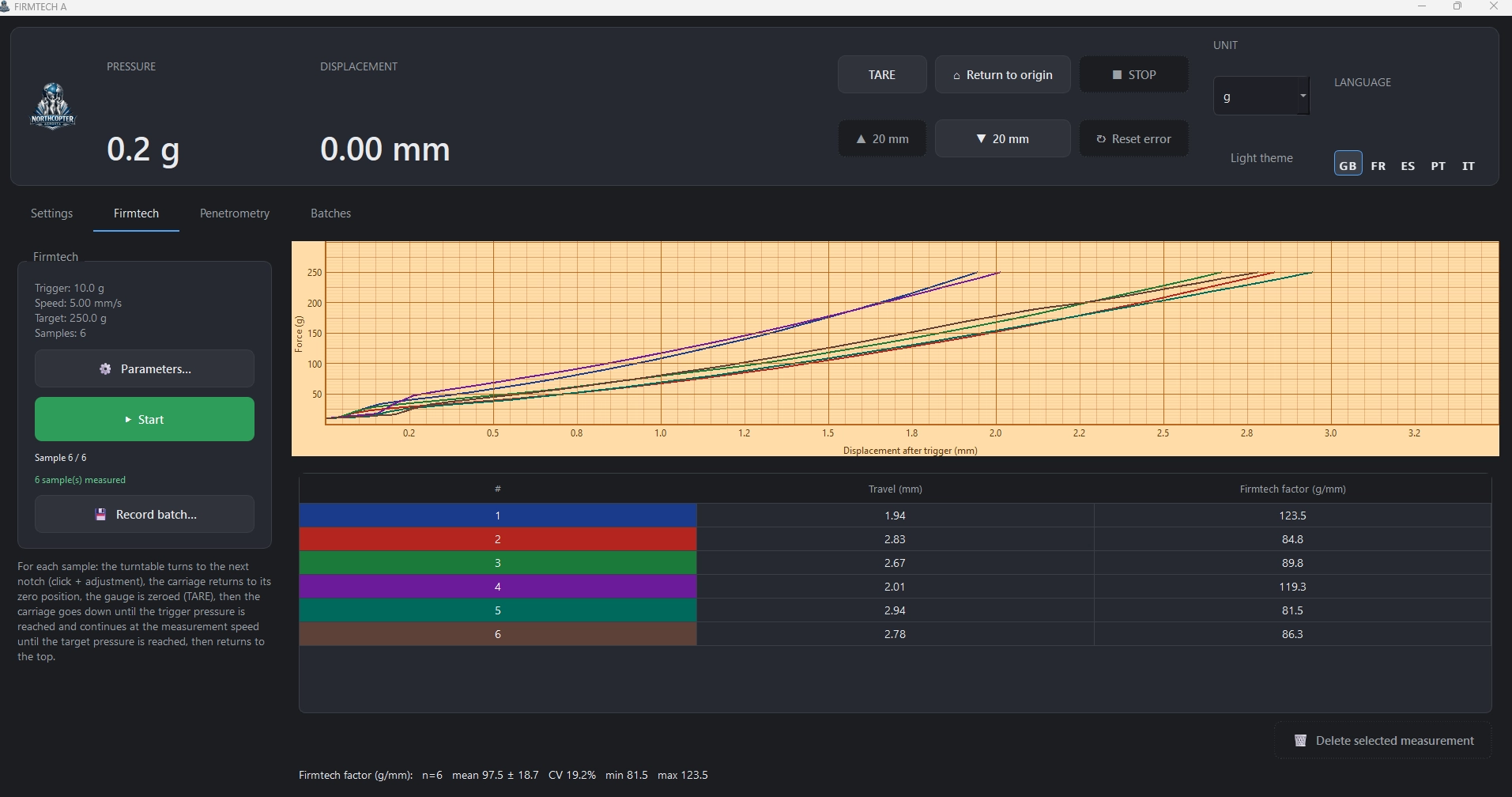
Firmtech mode (force-driven). You define a target force. The instrument descends until a contact threshold is detected, then compresses at a controlled speed until the target force is reached. The result is the compression travel (in hundredths of a millimetre) and a firmness factor in g/mm, calculated as the force increment divided by the travel. Softer fruit deforms further for the same force and gives a lower factor.
Penetrometry mode (depth-driven). You define a penetration depth. The instrument measures the peak force reached, and the depth at which it occurred, over that fixed stroke. This mode is suited to skin-puncture and flesh-resistance studies, and is ideal for strawberries.
In both modes the contact (trigger) force, approach speed, measurement speed (up to 30 mm/s) and number of samples are all adjustable, and the carriage returns to the top automatically after each sample.
Fine texture profile analysis : three modes
The Profile Analysis menu turns FIRMTECH A into a complete texture analyser that meets market standards, with the added benefit of the turntable for measuring a whole batch in one run. Three test modes are available, each with many adjustable parameters:
– Single compression.
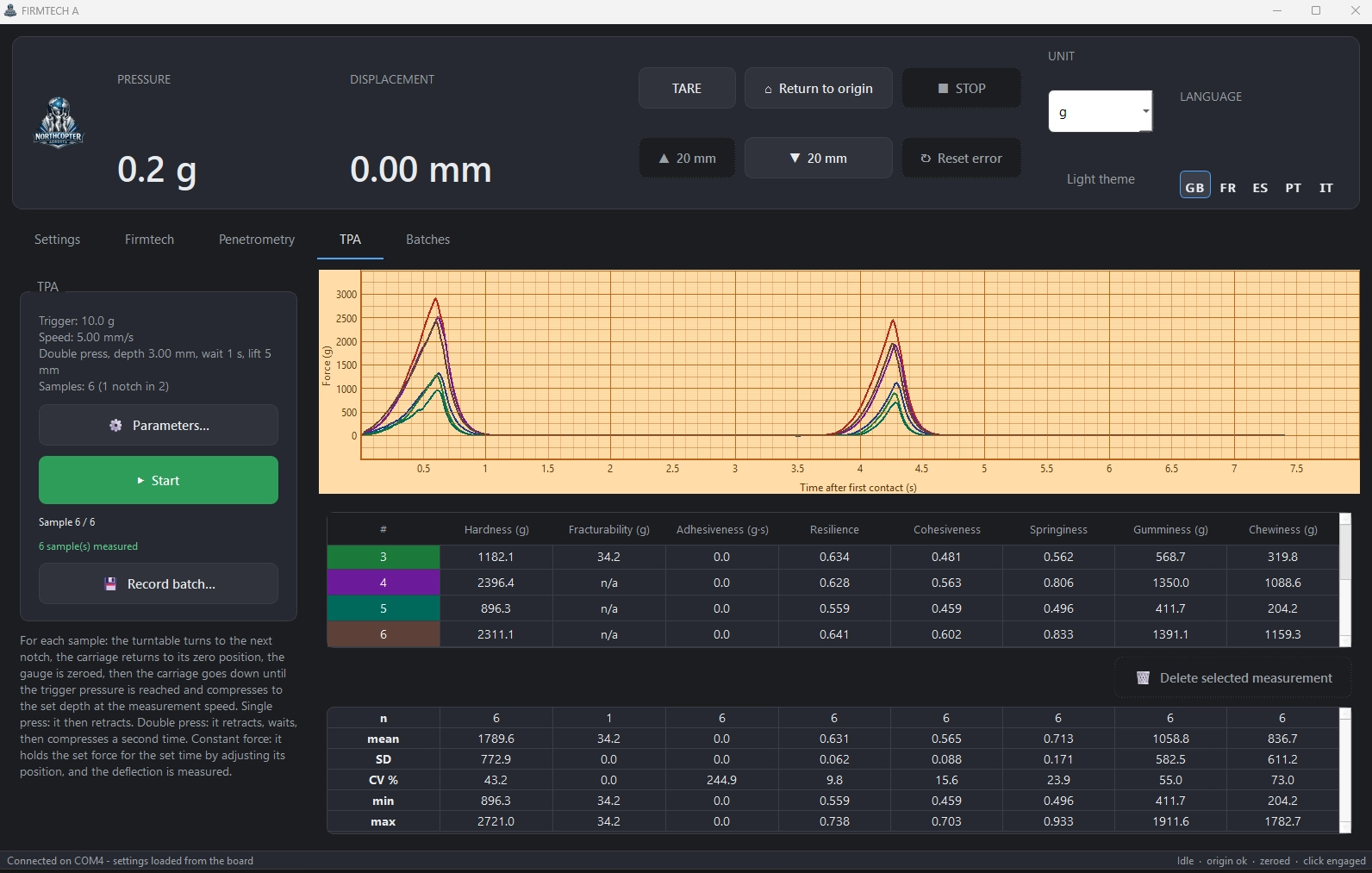
– Double compression (classic TPA), which determines hardness, fracturability, adhesiveness, resilience, cohesiveness, springiness, gumminess and chewiness.
– Constant force.
Because soft foods, cosmetic creams and pharmaceutical products deform by fractions of a millimetre under a few grams of force, the instrument’s fine position accuracy and force resolution are what make small texture differences between samples measurable. Dedicated cups can be fitted to the turntable to hold the samples, for example small cups designed for tea. The texture profile of each sample is obtained instantly.
See every measurement as it happens
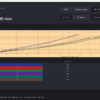
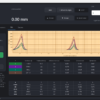
A live force-versus-displacement curve is drawn on an orange millimetre-paper style plot while each sample is compressed, with a distinct colour per sample. Results appear in a table as they are produced, along with the descriptive statistics that matter for a batch:
n, mean ± standard deviation, coefficient of variation (CV %), minimum and maximum
Force can be displayed in grams, newtons or millipound-force, selectable at any time. Outliers (a misplaced or damaged sample) can be selected and removed from the batch before it is recorded.
Traceable lot records, straight to Excel
Every run can be recorded to a lot file identified by name or barcode:
One Excel workbook per lot, with product type and, for fruit, postharvest information (days after harvest, storage conditions) stored alongside the data.
Raw force-displacement curves for every sample, with three-decimal resolution, ready for your own analysis.
A summary sheet with per-sample values and batch statistics, recalculated each time you add samples.
Re-recording under the same lot name appends to the existing file, which makes time-course, storage and stability studies straightforward.
You choose the save folder, and the software remembers it.
Presets and starting-point settings
Pick a fruit type from the built-in list, or type your own product name. For some fruit the software proposes starting-point trigger and target forces drawn from published compression-testing literature. You can then save your own validated settings under any product name (trigger, target, measurement speed and number of samples), reload them with one click, and delete them when no longer needed. Your lab’s protocol becomes a single button press.
Practical details
Multilingual interface: English, French, Spanish, Portuguese and Italian, switchable live from the main window.
Windows desktop application with automatic detection of the instrument over USB, and a light or dark display theme.
Settings stored in the instrument, so a configured unit behaves identically on any computer it is plugged into.
Load cell capacity: 3 kg. Force resolution: 0.1 g. Maximum stroke: 50 mm. The initial height of the tray is adjustable with two screws, so much larger samples, such as peaches, can be tested.
Who is it for?
Plant-breeding and postharvest research teams comparing genotypes, harvest dates and storage treatments.
Packhouse and quality-control laboratories needing documented, per-lot firmness records.
Growers’ cooperatives and technical institutes wanting a fast, objective alternative to manual firmness grading.
Food, cosmetic and pharmaceutical R&D and QC laboratories needing fine, batch-wide texture profile analysis of soft products.
What comes with the machine?
Metallic tip, diameter 16 mm, dedicated to Firmtech measurement mode
Metallic tip, diameter 3.5 mm, for penetrometry (puncture) mode
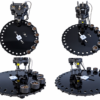
One 32-notch table with square cups for blueberry, oval grape, oval plum, olive, long cherry tomato, raspberry and blackberry
One 32-notch table with circular cups for cherry, round cherry tomato and round grape
A USB stick with the software installer (free licence)
A power module